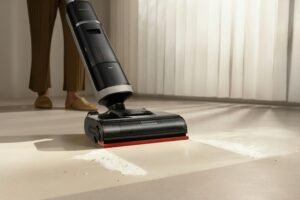
Core Takeaway: The dust bag of cleaning equipment is not only a “storage bin” for dust and debris but also the “first line of defense” for protecting indoor air quality. Many people know that large-capacity dust bags are more convenient, but they overlook two key details: regular replacement and standardized operation — a dust bag does not need to be fully filled to be replaced, and improper operation during replacement may lead to dust leakage, which becomes a health hazard. Mastering the standard replacement cycle of dust bags and following scientific dust-proof operation specifications can truly give play to their cleaning value and protect the respiratory health of the whole family.
I. Replacement Misconception: Don’t Wait Until It’s “Completely Full” to Replace


First, it is clear that the core of dust bag replacement is to “prevent overflow and leakage”, rather than simply waiting for it to be fully filled. Many people have a misunderstanding that they only need to replace the dust bag when it is completely full. In fact, this approach has two major health risks:
- Excessive accumulation of dust will block the dust collection channel, reduce the suction power of the equipment, and make it impossible to thoroughly absorb fine dust, leaving pollutants such as mites and PM2.5 in the room;
- An overfilled dust bag is prone to damage due to excessive pressure, or dust leakage during disassembly, which will cause secondary pollution.
II. Three Key Factors for Determining the Replacement Cycle
So, how to define the replacement cycle of the dust bag? There is no fixed “number of days” standard. It mainly depends on three key factors, and clear replacement specifications can be summarized in combination with usage scenarios, which is easy for ordinary people to follow.
1. Capacity Filling Degree: The 70%-80% Golden Critical Point
Regardless of the capacity of the dust bag, it is recommended to replace it when the filling degree reaches 70%-80%. This is the golden critical point that balances cleaning efficiency and health safety.
- For household vacuum cleaner dust bags with a capacity of 1-2L: if used once a day, they usually reach this filling degree in 1-2 weeks; if used 2-3 times a week, the replacement cycle can be extended to 2-3 weeks.
- For commercial dust bags with a capacity of more than 5L: the replacement cycle can be controlled at 1-4 weeks according to the cleaning area and dust amount, to avoid bacteria breeding due to long-term dust accumulation.
2. Usage Scenario: Adjust Flexibly Based on Dust Concentration
The replacement cycle needs to be flexibly adjusted according to the dust concentration.
- High-risk scenarios (pets, elderly, allergy sufferers, frequent cleaning of carpets/sofas): The dust bag will accumulate pollutants faster. It is recommended to shorten the replacement cycle — replace when the filling degree reaches 60%-70% to avoid excessive dust accumulation and aggravate allergy risks.
- Low-risk scenarios (hard floors, less dust): You can appropriately extend the replacement cycle, but it should not exceed 4 weeks at most to prevent the dust bag from getting damp, moldy and producing peculiar smell.
3. Type of Dust Bag: Different Materials Have Different Cycles
- Disposable paper dust bags: Relatively weak air permeability and sealing performance. Strictly follow the 70%-80% filling degree standard, and the service life should not exceed 3 weeks to avoid paper aging and damage leading to dust leakage.
- Reusable non-woven fabric and nylon dust bags: Better sealing performance. The replacement cycle can be appropriately extended, but it is necessary to check for damage every time after use, and replace them in time if there are holes or cracks.
III. Standardized Replacement Operation: Four Steps to Avoid Secondary Pollution
In addition to mastering the replacement cycle, standardized operation during replacement is also a key link to avoid secondary pollution. Many people are convenient to disassemble the dust bag directly in the living room or bedroom, which will cause fine dust to spread in the room and be inhaled by the human body, stimulating the respiratory tract.
Step 1: Seal in Advance to Reduce Dust Loosening
Before replacing, turn off the power of the cleaning equipment, move the equipment to a well-ventilated balcony or window (avoid operating in closed and crowded areas such as bedrooms and living rooms). If the equipment is equipped with a “dust cup lock” or “dust bag sealing cover”, fasten it first to prevent dust from leaking from the interface during disassembly.
Step 2: Disassemble Quickly to Avoid Shaking
When disassembling the dust bag, move gently and quickly — do not shake the equipment or the dust bag repeatedly (shaking will make the fine dust attached to the bag surface fall off and spread into the air). Hold the interface of the dust bag with one hand and pull it out gently, keeping the opening of the dust bag downward to reduce dust overflow.
Step 3: Seal and Dispose of the Used Dust Bag
- For disposable dust bags: Put them into a sealed garbage bag immediately after disassembly, and then throw them into the outdoor trash can. Do not disassemble or discard them indoors.
- For reusable dust bags: Put them into a sealed container first, and clean and dry them before reuse to avoid residual dust spreading.
Step 4: Clean the Interface and Install a New Dust Bag
Use a clean dry cloth to wipe the dust collection interface of the equipment to remove residual dust, so as to avoid the dust remaining at the interface affecting the sealing performance of the new dust bag. When installing the new dust bag, ensure that the interface is closely fitted and clamped in place, and check whether it is loose to prevent dust leakage during use.
IV. Two Health Maintenance Details for Dust Bags
In addition, there are two details to pay attention to for the health maintenance of dust bags:
- Avoid the dust bag getting damp. A humid environment will cause the dust to agglomerate, breed bacteria and produce peculiar smell. After cleaning humid areas (such as the bathroom), check the dust bag in time, and replace it if it is damp.
- Check the integrity of the dust bag regularly. Whether it is a disposable or reusable dust bag, if there is a breakage or leak, replace it immediately to prevent dust from leaking during use and causing secondary pollution.
V. Conclusion: Regular Standardized Operation Makes Cleaning Truly Safe
The core of cleaning is to protect health, and the replacement and maintenance of dust bags is an indispensable part of it. Mastering the replacement cycle standard and standardized operation steps can not only ensure the cleaning effect but also avoid the health risks caused by improper operation.
Don’t let “laziness in changing the dust bag” or “irregular operation” turn the cleaning process into a source of pollution. Regular and standardized replacement and operation can make the dust bag truly become a “guardian” of indoor air quality, allowing every cleaning to be safe and reassuring.